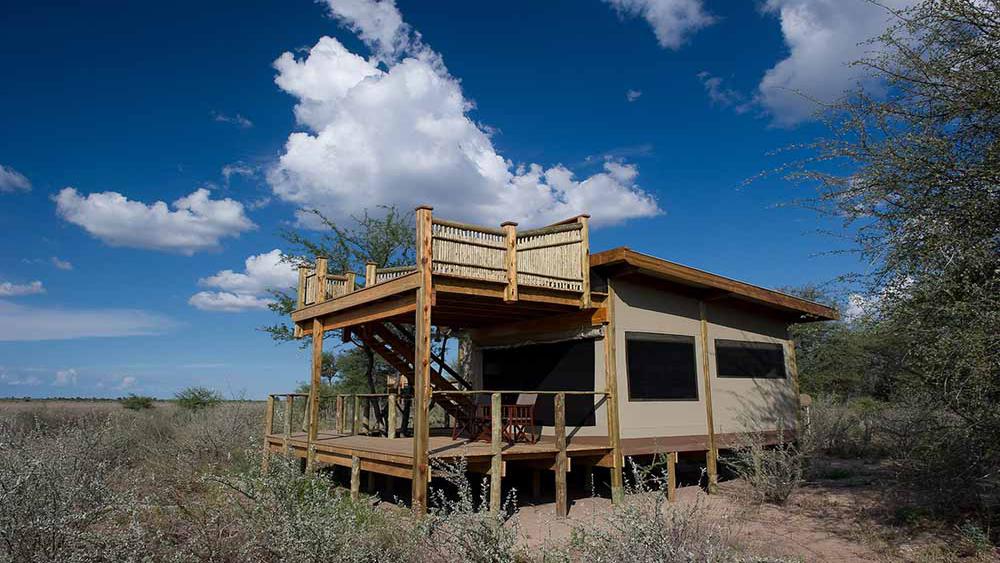
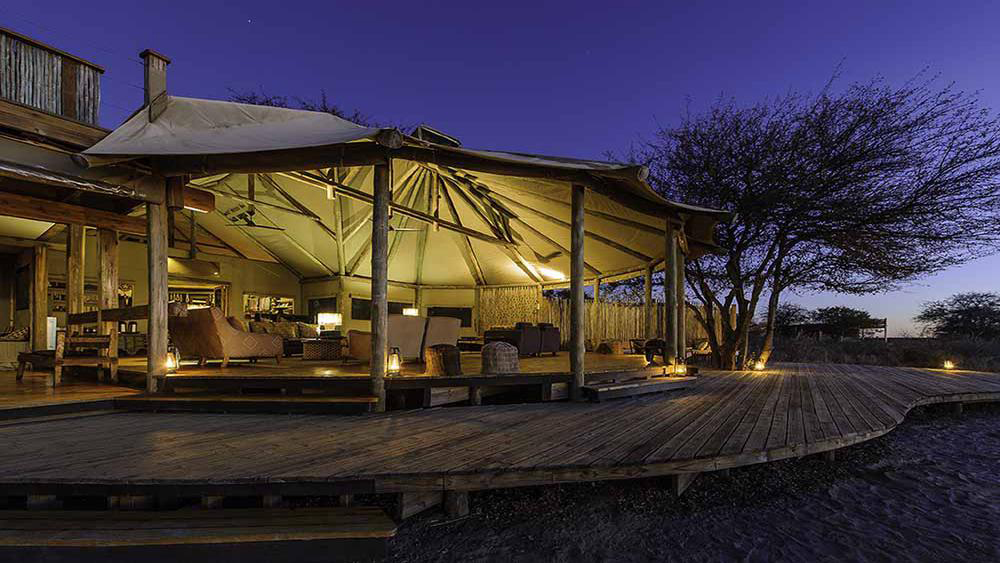
The Kalahari Desert is the largest continuous stretch of sand in the world, it contains no permanent surface water and there is precious little rain. However, the Kalahari does not resemble a “true” desert, as it contains a wide variety of habitats, including wide-open grasslands and Acacia trees.
The Central Kalahari Game Reserve was set up in 1961 not to protect animals but as a refuge for the San Bushmen, who have inhabited the Kalahari for over 30,000 years. The Bushmen or San as they are also known, are one of Africa’s oldest people. They are also renowned for their ancient culture and the ability to survive in untamed and inhospitable areas. Their hunter-gatherer lifestyle, skill and wisdom, allow them to cope with the harsh and ever challenging Kalahari. Western culture has influenced their traditional lifestyle, and very few Bushmen still follow the ways of their ancestors, however, some bush survival knowledge is still passed down from generation to generation, and safari camps in this region often employ Bushmen as trackers and guides, giving visitors an education on how to survive in the harshest of environments.

Considering the extremity of the area, it is a minor miracle that the Central Kalahari Game Reserve manages to sustain an amazing quantity of wildlife. Herds of springbok, gemsbok, and blue wildebeest, to name a few, survive the dry and desolate conditions by adapting to the environment. The rain that does fall occurs in the summer in the northern section of the Central Kalahari Game Reserve, and the whole area is transformed as if by magic. Around an area know as “Deception Valley”, the vast plains burst into life and the migrating animals that are desperate for food and water converge on this area in their masses. There are literally thousands of springbok, gemsbok and wildebeest, with lion, cheetah, and jackal never too far behind.

The Makgadikgadi Pans, once the centre of a great lake, are thought to be the largest saltpans in the world. After the summer rains, the pans fill up to a depth of a few centimetres, and it becomes rich with crustaceous and algae, which attracts over 30,000 breeding pairs of pink flamingos. Out of nowhere, the region is transformed from a desolated saltpan to a heaving mass of beautiful pink birds.
Situated around the Pans, are vast grasslands fringed with palm trees, which host a vast array of wildlife from antelope, zebra and wildebeest to lion, hyena and cheetah. Both, dry (April to October), and wet (November to March) season visits are recommended. The wet season, to witness the masses of flamingos, pelicans, and huge migrations of zebra and wildebeest, and the dry season to witness the incredible landscape of the pans at their driest, and to experience the remoteness and total isolation of this incredible region.

Jack’s Camp is located deep in the Kalahari Desert on the edge of the Makgadikgadi Pans, the largest saltpans in the world…
San Camp is a basic yet comfortable tented camp situated on the edge of the Makgadikgadi Pans in Botswana. The activities at San Camp allow guests to obtain a good understanding of the Kalahari and its wonderful inhabitants…
This guided Botswana Safari explores the contrasts of three major ecosystems: the Makgadikgadi saltpans, Deception Valley in the Kalahari Desert and finally the fertile green islands and crystal-clear waterways of the Okavango Delta.